 English
  Русский
How to remove rust from metal: car bodies, tools and fasteners
Updated:
To remove rust from metal, brush off the loose layer, apply a mineral acid gel about 2 mm thick and rinse it off with water after 15–30 minutes; deep corrosion takes 2–3 such treatments. Treat any rust that remains with Rust converter, and paint the clean metal or cover it with Rust protection spray as soon as it is dry. Bare metal left unprotected quickly oxidises again.
What you need
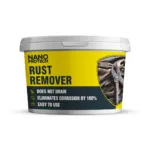
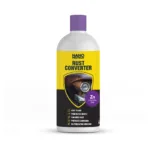
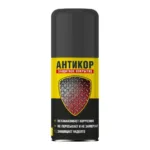
Why rust comes back
Rust is a corrosion product: metal oxidises under the action of moisture and salt. A remover dissolves rust but leaves no protective layer. So rust removal ends with protection: paint or an anti-corrosion coating.
How to remove rust with a gel — step by step
- Prepare the area. Work outdoors or in a ventilated room at +5 °C to +35 °C, out of direct sunlight. Wear rubber gloves, a respirator and goggles.
- Remove loose rust. Take off thick, loose rust and oxides with a wire brush. Mask nearby paint, plastic and rubber with tape or film.
- Shake the container. Always shake the NANOPROTECH Rust remover gel before use.
- Apply the gel. Spread it evenly with a brush or roller about 2 mm thick — about 20 ml per 10 × 10 cm. It is easy to apply to sloping body panels: doors, wings, sills and wheel arches.
- Leave it for 15–30 minutes. Deeper corrosion needs longer within this range. Meanwhile, deep rust can be worked with a brush, without splashing. Do not leave the gel overnight: once dry, it stops working.
- Rinse it off. Wipe off the gel with a cloth, rinse with plenty of water and wipe dry: only water removes the acid, a solvent will not. Rinse seams and gaps especially well — a weak baking soda solution can be used, then clean water. Deep, long-standing corrosion usually needs 2–3 treatments.
- Treat remaining rust. Where rust cannot be removed to bare metal, apply shaken Rust converter to the rinsed, dry surface with a brush or roller — only on rusty spots, at +15 °C or above. Let it dry for at least 30 minutes, away from moisture: the rust turns into a primer for painting.
- Protect the metal at once. Before painting, treat bare metal with a solvent; over the converter, paint 24 hours after it has dried, with no separate primer. If you are not painting, spray Rust protection spray from 20–30 cm and wait 10 minutes: it displaces moisture and protects metal from oxidation.
If rust has seized a thread, first see how to undo a seized bolt.
Why it may not work
- Rust remains. Thick, loose rust was not brushed off, or the gel was not left long enough; deep corrosion needs repeat treatment.
- The gel dried out. It was applied in the sun or to hot metal, or left too long. Work in the shade and rinse it off in time.
- The metal rusted again. It was not protected straight after drying, or the gel was removed with a solvent instead of water.
- It was too cold. Below +5 °C the remover works noticeably more slowly, and Rust converter needs +15 °C or above. Move a cold part into a warm, ventilated room.
Safety precautions
- Rust remover and Rust converter contain acids. Avoid swallowing them and contact with eyes and skin; on contact, rinse with plenty of running water and see a doctor if necessary.
- The remover is for steel, copper, brass, bronze and tinplate. Do not use acid products on chrome-plated or galvanised parts, aluminium, stainless steel, blued surfaces, enamel baths and sinks, tiles, anything that touches food, or brake parts.
- Rust protection spray is a flammable pressurised aerosol: keep it away from open flames, hot objects and live equipment, and do not heat the can above +50 °C.
- Keep the products out of the reach of children.
Frequently asked questions
What removes rust from metal?
A gel remover based on mineral acids. It dissolves rust, scale and mineral deposits on steel, copper, brass, bronze and tinplate; the residue rinses off with water, leaving clean metal.
Can rust be removed without sanding?
Partly: thick, loose rust is still brushed off before the remover. Firmly bonded rust that the remover has not taken off can be treated with a converter, which turns it into a phosphate primer for painting; rinse the surface with water and let it dry completely first.
Remover, converter or rust protection spray — which should I choose?
They are usually used in turn. Start with the remover: it dissolves rust, leaving clean metal, and heavy rust needs several applications. A converter chemically turns the rust left after the remover into a primer, with no need to clean down to bare metal or prime separately. Rust protection spray stops corrosion on metal that will not be painted.
Why is there a white deposit after treatment?
Salts left when the gel has partly dried or was not fully rinsed off; after a converter, excess product that did not react. Before priming and painting, wash it off with water and a brush after the remover, or brush or wipe it off after the converter, then dry and degrease the surface.
More solutions
- How to remove a seized bolt or nut
- Rustproofing car cavities, sills and the underbody yourself
- How to fix rust spots on a car body yourself
- How to clean oxidised electrical contacts and protect them from moisture
- What to put on battery terminals to stop corrosion
- Car won’t start after rain or misfires after an engine wash: how to protect the electrics from moisture
Still have questions?
Describe your task and a NANOPROTECH technical specialist will suggest the right product and how to use it.