 English
  Русский
How to fix rust spots on a car body yourself
Updated:
To fix rust spots on a car body, wire-brush off the loose rust and dissolve the rest with a rust remover gel, repeating the treatment on deep corrosion. Treat any remaining rust with Rust converter and paint it 24 hours after it has dried — no separate primer is needed. If you are not painting yet, cover the metal with Rust protection spray as soon as it is dry.
What you need
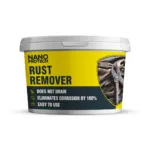
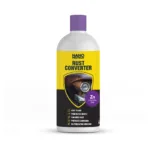
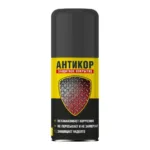
Where rust spots come from
Rust spots are small patches of corrosion on the car body. They usually appear where the paint is damaged: in stone chips, on door, bonnet and wing edges, on sills and wheel arches. Moisture and salt reach the metal and corrosion spreads under the paint, so the sooner you start repairing rust spots, the smaller the area to treat.
The three products are used in this order:
- NANOPROTECH Rust remover gel — first: the gel dissolves rust, and rinsing with water leaves clean metal; deep corrosion needs several applications.
- Rust converter — for the rust that remains after the remover: it turns it into a phosphate primer for paint, with no separate priming.
- Rust protection spray — when you are not painting yet: it displaces moisture and stops corrosion.
How to fix rust spots on a car — step by step
- Prepare the area. Work outdoors or in a ventilated room, in rubber gloves, a respirator and safety goggles. Apply the remover at +5 °C to +35 °C and the converter at +15 °C or above, and neither to hot metal.
- Clean the rust spot. Remove dirt and grease, then wire-brush off loose rust and flaking paint back to firmly attached paint. Bare metal is not needed: the remover dissolves the rust and the converter turns what remains into primer. Mask the surrounding paintwork with masking tape.
- Apply the remover. Always shake the container, then brush the gel on about 2 mm thick, on the rust only. Rinse any gel off the paint with water straight away.
- Rinse off and repeat if needed. After 15–30 minutes wipe off the residue with a cloth, rinse with water and wipe dry. Deep corrosion usually needs 2–3 treatments.
- Treat the remaining rust. Once the area is completely dry, always shake the bottle, then cover only the remaining rust with a thin brush or a roller, without rubbing it in. Wipe any drops off the paint straight away with a damp cloth.
- Let it dry. Leave it for at least 30 minutes, keeping moisture off. There is no need to rinse it off with water. For a stronger effect, clean off the formed primer mechanically and apply the converter again.
- Paint. Treat clean metal with a solvent and paint it as soon as it is dry; over the converter, paint 24 hours after drying. Brush or wipe off any white bloom from the converter and degrease the surface first. No primer is needed over the converter, but body filler is not applied directly onto the converted layer: prime it first.
If you are not painting yet, cover the metal with Rust protection spray as soon as it is dry. Full details: how to remove rust from metal.
Why it may not work
- The rust has not converted. Loose rust was left, the temperature was below +15 °C, or the product was left for less than 30 minutes. Clean off the formed primer and repeat the treatment.
- The rust came back after the remover. The metal was not protected at once, or the gel was removed with a solvent instead of water. Rinse the acid off with water, wipe dry, then paint or apply Rust protection spray.
- The paint is stained. The paintwork around the spot was not masked. Apply acidic products to the rust only and wipe drops off the paint straight away.
Safety precautions
- Rust converter and rust remover contain acid: avoid swallowing them and contact with eyes and skin. In case of contact, rinse with plenty of running water and seek medical advice if necessary.
- Use the remover in rubber gloves, a respirator and safety goggles, outdoors or in a ventilated room. Keep acidic products off chrome and galvanised parts, aluminium and brake system components.
- Rust protection spray is a flammable pressurised aerosol: do not spray it near open flames or hot objects, and do not heat the can above +50 °C.
- Keep the products out of the reach of children.
Frequently asked questions
What should I treat rust spots on a car with before painting?
First a rust remover gel, then Rust converter. The remover dissolves rust, with several applications on deep corrosion; the converter turns the stubborn rust that remains into a water-insoluble phosphate primer that prevents corrosion under the paint, so no separate primer is needed.
How long after rust converter can I paint?
24 hours after it has dried. The product itself needs at least 30 minutes to dry, and moisture must be kept off it all that time.
What should I do with a stone chip if I am not painting yet?
Protect the metal with Rust protection spray. Rust converter goes only on the rust that remains, and its layer is a primer for paint, so do not leave it unpainted for long. Before painting over the spray, remove its film completely with a solvent and degrease the area.
How much converter do I need to repair chips on a car body myself?
About 200 ml per 2 m², depending on how thick the rust layer is. Apply it only to the area being treated.
More solutions
- How to remove rust from metal: car bodies, tools and fasteners
- How to remove a seized bolt or nut
- Rustproofing car cavities, sills and the underbody yourself
- How to clean oxidised electrical contacts and protect them from moisture
- What to put on battery terminals to stop corrosion
- Car won’t start after rain or misfires after an engine wash: how to protect the electrics from moisture
Still have questions?
Describe your task and a NANOPROTECH technical specialist will suggest the right product and how to use it.