 English
 Русский
Rustproofing car cavities, sills and the underbody yourself
Updated:
Rustproofing car cavities yourself is done with an aerosol anti-corrosion product: it is fed into the sills, chassis rails and inner parts of the doors and boot through a tube with a spray head, while the underbody and wheel arches are sprayed directly. Oil-wax anticorrosion goes onto a cleaned, degreased surface in 2–3 coats at +10 °C to +30 °C; Rust protection spray needs no pre-treatment.
What you need
Why hidden cavities rust first
Water, dirt and de-icing chemicals get into the sills, chassis rails and the bottom of the doors. In a closed cavity moisture lingers, and corrosion works from the inside. So cavities are treated with a product that displaces moisture, penetrates seams and stays on the metal as an elastic film. For DIY work, an anti-corrosion spray in a can is convenient:
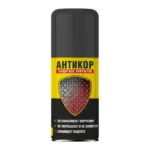
- NANOPROTECH Rust protection spray — oil-based, applied without pre-treatment; it displaces moisture and preserves metal. It suits hidden cavities, sills, wheel arches, the underbody, drain holes and fasteners. The film does not dry out or freeze, and in cavities protection lasts at least 1 year.
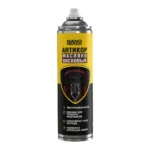
- NANOPROTECH Oil-wax anticorrosion — for the underbody, hidden cavities, seams, sills, chassis rails and inner parts of the doors and boot. The oil penetrates microcracks, and the wax forms a water-repellent film that resists de-icing chemicals, salt and vibration; protection lasts up to 12 months.
How to rustproof cavities, sills and the underbody: step by step
- Choose the weather and place. Oil-wax anticorrosion is applied at +10 °C to +30 °C and air humidity of no more than 80%, Rust protection spray at above-zero temperatures on dry metal, so do the job before the cold weather. Keep the cans warm beforehand.
- Prepare the body. Remove dirt and loose rust and degrease the surface, for example with white spirit. Mask areas that should not be treated with paper or cloth. Paint or underseal any areas that need it before the anti-corrosion treatment: paint and underseal adhere poorly to an oily film. Rust protection spray needs no pre-treatment — a clean surface is enough.
- Shake the can. Shake Oil-wax anticorrosion vigorously for 2–3 minutes, and Rust protection spray before each use.
- Treat the hidden cavities. Insert the tube with the spray head through a factory access hole or drain hole — there is no need to drill new ones. Spray in short bursts while slowly pulling the tube out, so the product coats the walls. Do not aim at electrical connectors or rubber window seals, and check afterwards that the drain holes are open.
- Coat the underbody and arches. Spray Rust protection spray from 20–30 cm: this distance applies to exposed surfaces. Apply Oil-wax anticorrosion in 2–3 thin coats with 30 minutes' drying between them. If you use both, apply Rust protection spray first and the wax over it.
- Give it time. After Rust protection spray, wait 10 minutes. Oil-wax anticorrosion dries completely in 2 hours, after which the car can be driven. Remove drips with white spirit.
- Finish the job. After applying Oil-wax anticorrosion, turn the can upside down and spray until no more product comes out.
Why it may not work
- The wax goes on poorly. It needs the right temperature and humidity, a well-shaken can and 2–3 thin coats rather than one thick one.
- Rust was left under the coating. Rust protection spray does not remove or convert rust; it preserves the metal. Remove loose rust before applying the wax. To take rust off down to bare metal, see how to remove rust from metal.
Safety precautions
- Both products are flammable pressurised aerosols. Do not spray them near open flames, hot objects or live equipment, leave the can in the sun or heat it above +50 °C.
- Work outdoors or in a well-ventilated room, but not in a closed garage; air the car interior afterwards. If the product gets into the eyes, rinse with water; on skin, wash with soap and water.
- Do not treat brake system parts — discs, drums, pads, calipers, cylinders and their rubber seals — and keep Oil-wax anticorrosion off engine and exhaust system components.
- Do not pierce or burn the cans, even after use, and keep them out of the reach of children.
Frequently asked questions
Can anti-corrosion spray go straight onto rust?
Rust protection spray, yes: it needs no pre-treatment, soaks into rust, displaces moisture and stops corrosion, but does not remove it — the rust only darkens from the oil. Before Oil-wax anticorrosion, remove dirt and loose rust and degrease the surface; the wax then preserves any remaining corrosion spots.
Why does the coating not dry?
That is by design: Rust protection spray stays on the metal as an elastic oily film that does not dry out or freeze. On exposed areas dust can stick to it, so spread out any excess. Oil-wax anticorrosion dries completely in 2 hours.
When should the underbody and sills be treated?
In warm, dry weather, before the cold sets in. On exposed areas, renew the coating after washes and before winter.
More solutions
- How to remove rust from metal: car bodies, tools and fasteners
- How to remove a seized bolt or nut
- How to fix rust spots on a car body yourself
- How to clean oxidised electrical contacts and protect them from moisture
- What to put on battery terminals to stop corrosion
- Car won’t start after rain or misfires after an engine wash: how to protect the electrics from moisture
Still have questions?
Describe your task and a NANOPROTECH technical specialist will suggest the right product and how to use it.