 English
 Русский
How to clean oxidised electrical contacts and protect them from moisture
Updated:
To clean oxidised contacts, work in two steps: first remove oxidation and dirt with NANOPROTECH Electrical contact cleaner, then apply a protective product that keeps moisture away from the metal. For cars and machinery, use Dielectric, whose film protects for up to 1 year; for switchboards, electric motors and industrial equipment, use the industrial coating Electric. Treat contacts only on de-energised equipment.
What you need
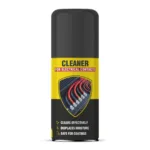
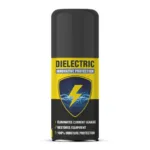
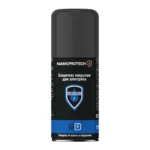
Why contacts oxidise
The main cause is moisture in any form: damp, condensation, fog, rain or spray from washing. A layer of oxides forms on the metal — green deposits on contacts, a furry crust on terminals. This layer conducts current poorly: voltage drops, current leaks, and sensors, connectors and terminals start to work intermittently. Road de-icing chemicals, salt and battery electrolyte speed the process up.
How to clean oxidised contacts and protect them — step by step
- Switch off the power. Disconnect the device from the power supply; in a car, switch off the ignition and remove the negative battery terminal. Wait 5–10 minutes for hot parts to cool: a sudden temperature change can disrupt their operation.
- Get access to the contacts. Separate the connectors and remove covers so the product reaches both halves of the connection.
- Remove thick deposits. The cleaner's solvent removes dirt, oil and thin oxidation. Brush off thick green deposits first, and clean contacts with a thin plating using a soft brush or an eraser.
- Apply the cleaner. Always shake the can of Electrical contact cleaner, then carefully spray the oxidised contacts. Do not flood soft rubberised coatings and membranes next to them.
- Let it evaporate. The cleaner evaporates completely, so there is nothing to rinse off. On open contacts this takes minutes, in connectors and enclosed units longer: no liquid or solvent smell should remain. If oxidation remains, repeat the treatment.
- Apply protection. Shake the can of Dielectric and spray a thin layer from 20–30 cm onto the contacts of both connector halves. There is no need to fill the connector.
- Wait 10 minutes and reassemble. The Dielectric film does not dry, so there is no drying time. Wipe off drips with a cotton cloth, join the connectors, refit the covers and switch the power back on.
For switchboards, electric motors and equipment in damp rooms, use Electric instead of Dielectric. Apply it to equipment disconnected from the mains at −20 °C to +35 °C, from 20–30 cm; it starts working after 15 minutes. The coating works at −80 °C to +250 °C, protects for up to 1 year and prevents not only oxidation but also fungus and mould on contacts.
For battery terminals, see what to put on battery terminals.
Why it may not work
- Thick deposits were not brushed off. The cleaner dissolves dirt and thin oxidation. Remove thick green deposits mechanically first, then repeat the cleaning.
- Protection went on dirty contacts. Protective sprays are applied to a clean surface. Remove oxidation with the cleaner first and wait until it has evaporated.
- Contacts were cleaned but not protected. The cleaner evaporates completely; for lasting protection from moisture, apply Dielectric after it.
- The connector was filled to the brim. A thin layer on the contacts is enough. Wipe off the excess with a cloth: on exposed areas the non-drying film collects dust.
Safety precautions
- Treat only de-energised equipment. The products are flammable: do not spray them near live equipment, open flames or hot objects.
- The cans are pressurised: do not heat them above +50 °C or leave them in the sun, and do not puncture or burn them, even when empty.
- Work in a well-ventilated area.
- In case of eye contact, rinse with water; on skin, wash with soapy water.
- Keep the cans out of the reach of children.
Frequently asked questions
What can I use to clean oxidised contacts?
Isopropanol-based Electrical contact cleaner. It removes dirt and oxidation, displaces moisture and evaporates completely, so there is no need to rinse it off. The product is safe for plastic, rubber and paintwork, but do not flood soft rubberised coatings and membranes with it.
When can I switch the device on after cleaning?
When the cleaner has completely evaporated: no liquid or solvent smell should remain on the contacts. After Dielectric, wait another 10 minutes, wipe off drips, reassemble the connection and switch on.
What should I put on contacts to stop them oxidising?
Dielectric. It displaces moisture and leaves a non-drying water-repellent film that protects for up to 1 year. For industrial equipment there is Electric: it prevents oxidation, fungus and mould on contacts and works at −80 °C to +250 °C.
Can contacts be cleaned while live?
No. Disconnect the device from the power supply before cleaning and let it cool for 5–10 minutes. The cans are flammable and must not be sprayed near live equipment.
What is the difference between contact cleaner and Dielectric?
The cleaner removes dirt and oxidation and evaporates completely; Dielectric stays on the contacts as a non-drying water-repellent film that protects them from moisture for up to 1 year. So clean first, then protect.
More solutions
- What to put on battery terminals to stop corrosion
- Car won’t start after rain or misfires after an engine wash: how to protect the electrics from moisture
- How to remove rust from metal: car bodies, tools and fasteners
- How to remove a seized bolt or nut
- Rustproofing car cavities, sills and the underbody yourself
- How to fix rust spots on a car body yourself
Still have questions?
Describe your task and a NANOPROTECH technical specialist will suggest the right product and how to use it.