 English
  Русский
What to put on battery terminals to stop corrosion
Updated:
To stop corrosion and oxidation, put NANOPROTECH Dielectric on battery terminals: it displaces moisture, restores contact conductivity and leaves a non-drying, water-repellent film that protects for up to 1 year. Before treatment, remove the oxidation with Electrical contact cleaner. For machinery that works in damp and aggressive environments, there is the industrial coating Electric.
What you need
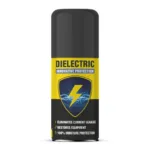
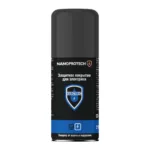
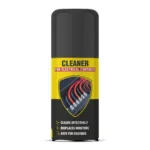
Why battery terminals oxidise
Terminals oxidise under the action of moisture, condensation, road de-icing chemicals and electrolyte. A layer of oxides forms on them, often a furry crust. It worsens the contact: the voltage drops, the battery charges less well and the engine may be hard to start. A protective film keeps out moisture and oxidation, so terminals are treated after every cleaning.
How to treat battery terminals — step by step
- De-energise the circuit and remove the terminals. Stop the engine, switch off the ignition and all consumers, and let hot parts cool. Battery terminals stay live even with the ignition off, so remove them: negative first, then positive.
- Clean the terminals and posts. Brush off thick deposits first. Then shake the can of Electrical contact cleaner and spray the terminals and battery posts.
- Let the cleaner evaporate. It evaporates completely, so there is nothing to rinse off. If oxidation remains, repeat the treatment.
- Apply Dielectric. Shake the can and spray a thin layer from 20–30 cm onto the terminals and posts, including their mating surfaces: when the terminals are tightened, the film is squeezed out of the contact point.
- Wait 10 minutes. Wipe off any excess that could collect dust with a cotton cloth — the protective layer remains.
- Reconnect the battery. Fit the terminals — positive first, then negative — and tighten them firmly. Wipe off any drips after assembly.
What should you put on battery terminals if the vehicle works in damp, frost or road chemicals? Instead of Dielectric, you can apply Electric: it contains more antioxidants and anti-corrosion additives. It is applied in the same way, to removed and cleaned terminals, at −20 °C to +35 °C and from 20–30 cm, and left for 15 minutes to start working. The operating temperature of the coating is −80 °C to +250 °C.
To clean oxidation off other contacts — connectors, sensors, circuit boards — see how to clean oxidised contacts.
Why it may not work
- Protection was applied over oxidation. Protective sprays go on a clean surface. Remove the deposits with a brush and the cleaner first and wait until it has evaporated; if deposits remain, repeat the treatment.
- The terminals were not tightened enough. The protective film is no substitute for a tight contact. After treatment, tighten the terminals securely on the battery posts.
- The excess was not wiped off. On exposed surfaces the non-drying film collects dust. Wipe off the excess with a cotton cloth after the 10-minute wait.
Safety precautions
- Treat terminals removed from the battery, with the ignition off. The products are flammable: do not spray them near live equipment, open flames or hot parts.
- Do not spray the products near a battery while it is charging or just after: during charging it gives off flammable gas.
- The cans are pressurised: do not heat them above +50 °C or leave them in the sun, and do not puncture or burn them, even when empty.
- Work in a well-ventilated area.
- In case of eye contact, rinse with water; on skin, wash with soapy water. Keep the cans out of the reach of children.
Frequently asked questions
Should battery terminals be greased or coated?
Yes. A protective film keeps out the moisture and oxidation that worsen the contact and cause voltage drop. One treatment with Dielectric lasts up to 1 year.
Will a dielectric coating worsen the terminal contact?
No. The product itself does not conduct current, but it displaces moisture and removes thin oxidation. Where the metal of the terminal is pressed against the post, the film is squeezed out and does not block the current; around the contact, it protects against moisture and current leakage. That is why Dielectric restores contact conductivity.
How do I clean oxidation off battery terminals?
With Electrical contact cleaner. Remove the terminals, brush off thick deposits, shake the can, spray the terminals and posts and let the product evaporate completely; repeat if necessary.
How often should battery terminals be treated?
About once a year: Dielectric protection lasts up to 1 year after one treatment, and the protection period of Electric is also 1 year. Also reapply protection after every cleaning or whenever the terminals are removed.
Can I use Electric on battery terminals?
Yes. It is the industrial version, with an operating temperature of −80 °C to +250 °C, protection of contacts against fungus and mould and a 5-year shelf life. Apply it to removed and cleaned terminals at −20 °C to +35 °C and leave it for 15 minutes. For a passenger car, Dielectric is usually enough.
More solutions
- How to clean oxidised electrical contacts and protect them from moisture
- Car won’t start after rain or misfires after an engine wash: how to protect the electrics from moisture
- How to remove rust from metal: car bodies, tools and fasteners
- How to remove a seized bolt or nut
- Rustproofing car cavities, sills and the underbody yourself
- How to fix rust spots on a car body yourself
Still have questions?
Describe your task and a NANOPROTECH technical specialist will suggest the right product and how to use it.