 English
 Русский
How to use rust converter: instructions before painting
Updated:
To use rust converter, clean dirt, grease and loose rust off the metal, brush or roll the product onto the remaining rust at +15 °C or above and leave it for at least 30 minutes, keeping moisture off. The rust turns into a water-insoluble phosphate primer, grey to black in colour, so no separate primer is needed, and you can paint 24 hours after it has dried.
What you need
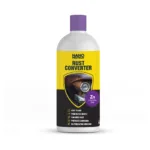
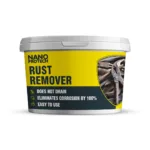
Rust remover or rust converter: which comes first
A remover dissolves rust: the corrosion products are rinsed off with water, leaving clean metal. A converter chemically turns the rust that remains into a primer layer and prevents electrochemical corrosion under the paint. So the order is: the remover first, several times on heavy rust, then the converter on the rust that could not be removed. It is used on the bodies of cars and agricultural machinery, garages, roofs, fences, metal structures, garden machinery and tools.
How to use rust converter — step by step
- Prepare the metal. Clean dirt and grease off the surface and remove a thick, loose layer of rust with a wire brush. Mask the paintwork around the rust with masking tape.
- Remove most of the rust with a remover. Shake the container of NANOPROTECH Rust remover, brush it on about 2 mm thick and leave it for 15–30 minutes, then wipe off the residue with a cloth, rinse with plenty of water and wipe dry. Repeat the treatment on heavy corrosion. The metal must be completely dry before the converter goes on.
- Shake the bottle. Always shake NANOPROTECH Rust converter before use. Work at +15 °C or above.
- Apply it to the rust. Brush or roll it onto the rusty areas, where rust remains, not onto clean metal. There is no need to rub it in or rinse it off; wipe any drops off the paint straight away with a damp cloth.
- Let it dry, keeping moisture off. The product needs at least 30 minutes to dry, and no water must get on the surface during this time.
- Repeat if needed. For a stronger effect, clean off the formed primer mechanically and treat the area again.
- Paint after 24 hours. If a white bloom has appeared, brush or wipe it off and degrease the surface before painting. Apply primer, enamel and mastic according to their manufacturers' instructions; body filler is not applied directly onto the converted layer, so prime it first.
A 200 ml bottle covers about 2 m², depending on how thick the rust layer is. If the metal will not be painted, protect it with an anti-corrosion coating after treatment. For more on preparing a car body, see how to fix rust spots on a car and how to remove rust from metal.
Why it may not work
- The rust has not converted. Dirt, grease or loose rust was left on, the temperature was below +15 °C, or the product got wet before 30 minutes had passed. Clean off the formed primer and repeat the treatment.
- A white bloom has appeared. Brush or wipe it off and degrease the surface before painting.
- Rust has come back under the paint. The treated metal was left unpainted for a long time, or body filler was applied directly onto the converted layer. Paint after 24 hours, and apply filler over primer.
- The product was applied in the wrong place. It is not applied to ceramics, tiles, bath and sink enamel, hot metal or exhaust system parts.
Safety precautions
- Both products contain acid. Work in rubber gloves and safety goggles, and with the remover also a respirator, outdoors or in a well-ventilated room.
- Avoid swallowing the products and contact with eyes and skin. In case of contact with eyes or skin, rinse with plenty of running water and seek medical advice if necessary.
- Keep the products out of the reach of children.
Frequently asked questions
How long after rust converter can I paint?
24 hours after it has dried. The product itself needs at least 30 minutes to dry, and moisture must be kept off it all that time.
Do I need primer after rust converter?
No. The product turns rust into a water-insoluble phosphate primer and prevents electrochemical corrosion under the paint, so no separate primer is needed. Body filler is not applied directly onto the converted layer.
Can rust converter be applied to clean metal?
No, just to rusty areas, where rust remains after the remover. Clean metal that will not be painted is protected with an anti-corrosion coating.
What is the difference between a rust converter and a rust remover?
A remover dissolves rust, leaving clean metal; a converter turns the rust that remains into a primer layer. Use the remover first, then the converter.
At what temperature should rust converter be applied?
At +15 °C or above. In the cold the product works less well, so move the job to a warm day or a heated garage.
More solutions
- How to remove rust from metal: car bodies, tools and fasteners
- How to remove a seized bolt or nut
- Rustproofing car cavities, sills and the underbody yourself
- How to fix rust spots on a car body yourself
- How to clean oxidised electrical contacts and protect them from moisture
- What to put on battery terminals to stop corrosion
Still have questions?
Describe your task and a NANOPROTECH technical specialist will suggest the right product and how to use it.