 English
 Русский
Squeaky brakes: why they squeak and when cleaning helps
Updated:
Squeaky brakes are caused by brake dust and dirt, oil or grease on the discs and pads, a film of rust after rain or a wash, or worn pads. If dirt is to blame, clean the brakes with a brake cleaner: it removes brake dust, carbon, oil and grease without dismantling, evaporates quickly and leaves no film. If the squeal is metallic or persists after cleaning, have the pads and discs checked at a garage.
What you need
Why brakes squeak
- Brake dust and road dirt between the pad and the disc are a common cause of squeaking and squealing when braking.
- Oil and grease on the disc or pads. They get there during work on nearby parts and, besides the squeak, reduce braking efficiency.
- A film of rust after rain, a wash or standing. The first few stops squeak until the pads wipe the film off.
- Worn pads. Many pads have a wear indicator that starts to squeal when the pad needs replacing. Cleaning will not help here.
- New pads may squeak until they bed in to the disc.
How to clean squeaky brakes — step by step
- Let the brakes cool. On hot parts the cleaner evaporates at once, before it can dissolve the dirt, and its vapour is flammable.
- Get access to the brakes. Secure the car and remove the wheel as the vehicle manual describes. Work outdoors or in a well-ventilated area.
- Protect the parts that must not be soaked. Do not flood rubber dust boots, hoses, plastic or painted parts with the cleaner; wipe any drops off them at once.
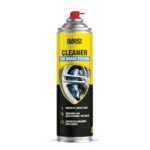
- Apply the cleaner. Shake the can of NANOPROTECH Cleaner for brake system and spray the disc, pads and calliper. Let the dirty solution run off and leave the surface to dry, wiping it with a clean cloth if necessary. On heavy dirt, repeat the treatment.
- Do not rinse with water. The cleaner evaporates quickly and leaves no film, while water quickly leaves a film of rust on brake discs.
- Re-grease the slide pins. The cleaner removes grease too: if it reached the greased calliper slide pins or a bearing, grease them again.
- Reassemble and test the brakes. Refit the wheel once the cleaner has fully evaporated and the surface is dry. Before driving, test the brakes with a few gentle stops at low speed.
Why it may not work
- The squeak soon came back. Dust and dirt build up again, especially after driving on dirt tracks and wet roads. If it returns within days, have the pad wear and slide pins checked at a garage.
- The noise is a metallic grinding. This usually means pads worn down to the metal. Cleaning will not help: the pads need replacing without delay.
- The brakes feel weaker. Either the cleaner had not evaporated, or oil has soaked into the pads. Wait until it has fully evaporated; oil-soaked pads are replaced.
Safety precautions
- The can is pressurised and the product is flammable. Do not spray it near open flames or on a hot engine, electronics or connectors, and do not heat the can above 50 °C.
- Work with good ventilation. In case of eye contact, rinse with water; on skin, wash with soap and water.
- After cleaning, always test the brakes at low speed. If they behave differently from before, do not drive off: take the car to a garage.
- Do not pierce or burn the can, even when empty, and keep it out of the reach of children.
Frequently asked questions
Why do my brakes squeak when braking?
Most often because of brake dust and dirt between the pad and the disc, oil on the disc or pads, or a film of rust after rain or a wash. A squeak can also mean worn pads: many have a wear indicator that squeals when the pad needs replacing.
What should I do if my brakes squeak?
Find the cause. A squeak that appears after rain or a wash and fades after a few stops is a film of rust. Dust and dirt are removed with a brake cleaner without dismantling. A metallic grinding, or a squeak that persists after cleaning, is a reason to have the pads checked at a garage.
Can brakes be cleaned without dismantling?
Yes. Spray the cleaner on the disc, pads and calliper, let the dirty solution run off and leave the surface to dry, wiping it with a clean cloth if necessary.
When can I drive after cleaning the brakes?
Once the cleaner has fully evaporated and the surface is dry. Before setting off, test the brakes with a few gentle stops at low speed.
Can I wash brakes with water?
There is no need. The cleaner evaporates quickly and leaves no film, while water quickly leaves a film of rust on brake discs.
More solutions
- How to lubricate a door or car lock so it does not stick or freeze
- How to fix a squeaky door: what to put on the hinges at home and in the car
- How to lubricate car door seals to stop them freezing and squeaking
- How to lubricate a treadmill deck with silicone lubricant
- How to lubricate a gate: hinges, locks and rollers of sliding gates and sectional doors
- How to remove rust from metal: car bodies, tools and fasteners
Still have questions?
Describe your task and a NANOPROTECH technical specialist will suggest the right product and how to use it.