 English
  Русский
How to lubricate a bike fork and shocks
Updated:
To lubricate a bike fork so it moves smoothly and does not squeak, use a silicone lubricant free of mineral oils: it does not damage seals or dust wipers, is safe for rubber and plastic and repels water. Apply it in a thin coat to clean fork legs at 0 °C to +28 °C, wipe off the excess and repeat every 50 km.
What you need
Why a fork needs silicone lube
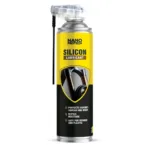
The fork legs and shock work in dust and moisture and are sealed with rubber seals and dust wipers, so a bike fork lube must be safe for rubber. NANOPROTECH Silicone bike lubricant is based on silicone (polymethylsiloxane) fluid with no mineral oils or fats. It does not damage seals or dust wipers, has high penetrating and lubricating capacity, reduces friction between moving parts, repels water and prevents rust. The lube works on the outside — on the fork legs and dust wipers.
How to lubricate a bike fork — step by step
- Choose the right conditions. The lube should be applied at 0 °C to +28 °C. In frost, bring the bike into a warm room to warm up and dry off any condensation. Work outdoors or in a ventilated room, away from open flames.
- Clean the fork legs. Remove dirt and dust from the fork legs (stanchions), seals and shock: the lube goes only on a clean surface, otherwise the fork will draw dirt under the dust wiper as it moves.
- Protect the brakes. Brake discs and pads must not be treated. Cover the disc with a cloth or remove the wheel.
- Shake the can. Always do this first.
- Apply the lube. It is easiest to spray it onto a clean cotton cloth and wipe the fork legs and shock shaft. If you spray directly onto the legs, use short bursts and a thin coat, and do not aim into the gap of the dust wiper. Lubricate the seatpost the same way, including a dropper post.
- Work the fork. Compress the fork several times so the lube spreads over the legs and dust wipers. There is no need to force it inside the fork.
- Remove the excess. Wipe off surplus lube and the ring of dirt at the dust wipers with a cotton cloth: a thin coat collects less dust, and the floor under the bike will not become slippery.
- Repeat the treatment. The lube should be applied every 50 km, as well as after washing the bike and when preparing it for a new season.
Why it may not work
- The lube went on a dirty fork. Clean the fork legs and seals first.
- The fork was treated in frost. The lube should be applied at 0 °C to +28 °C, so in winter treat the fork in a warm room, on dry fork legs.
- The excess was not wiped off. Dust sticks to a thick coat. Apply the lube thinly and wipe off the surplus after a few strokes of the fork.
- The squeak is not coming from the fork. Hubs, the bottom bracket, headset or brake cables can squeak too, and the Silicone bike lubricant is designed for them as well. For the chain there is a separate guide — how to clean and lubricate a bike chain.
Safety precautions
Do not treat brake discs or pads. If the lube gets on them, wipe the disc and degrease it with isopropyl alcohol or brake cleaner; pads soaked in lube are usually replaced, and the brakes are checked before riding. The can is pressurised and the product is flammable: do not spray it near open flames, red-hot objects or live electrical equipment, do not leave the can in the sun and do not heat it above +50 °C. Do not pierce or burn the can, even when empty, and keep it out of the reach of children. In case of contact with the eyes or skin, rinse with water.
Frequently asked questions
Can fork legs be lubricated with silicone lube?
Yes. The Silicone bike lubricant is designed for forks and shocks: it does not damage seals or dust wipers, repels water, and the fork legs then move smoothly without sticking.
What lube should I use on a bike fork?
A silicone lube free of mineral oils and fats: it is safe for rubber and plastic and does not damage seals or dust wipers. Apply it to a clean surface at 0 °C to +28 °C.
How often should I lubricate a bike fork?
Every 50 km, and after washing. Clean the fork legs first and wipe off the excess afterwards.
Can this lube be used on the chain?
Yes. The Silicone bike lubricant is also designed for the chain, hubs, bottom bracket, brake cables and headset. Clean the chain before applying it.
Is the lube suitable for coil and air forks?
Yes. The lube works on the outside — on the fork legs and dust wipers — so it is used on coil, air and elastomer forks. The oil and lubricant inside the fork are changed at servicing as the fork manufacturer specifies.
More solutions
- How to lubricate a bike chain and clean it so it stops squeaking
- How to remove rust from metal: car bodies, tools and fasteners
- How to remove a seized bolt or nut
- Rustproofing car cavities, sills and the underbody yourself
- How to fix rust spots on a car body yourself
- How to clean oxidised electrical contacts and protect them from moisture
Still have questions?
Describe your task and a NANOPROTECH technical specialist will suggest the right product and how to use it.