 English
 Русский
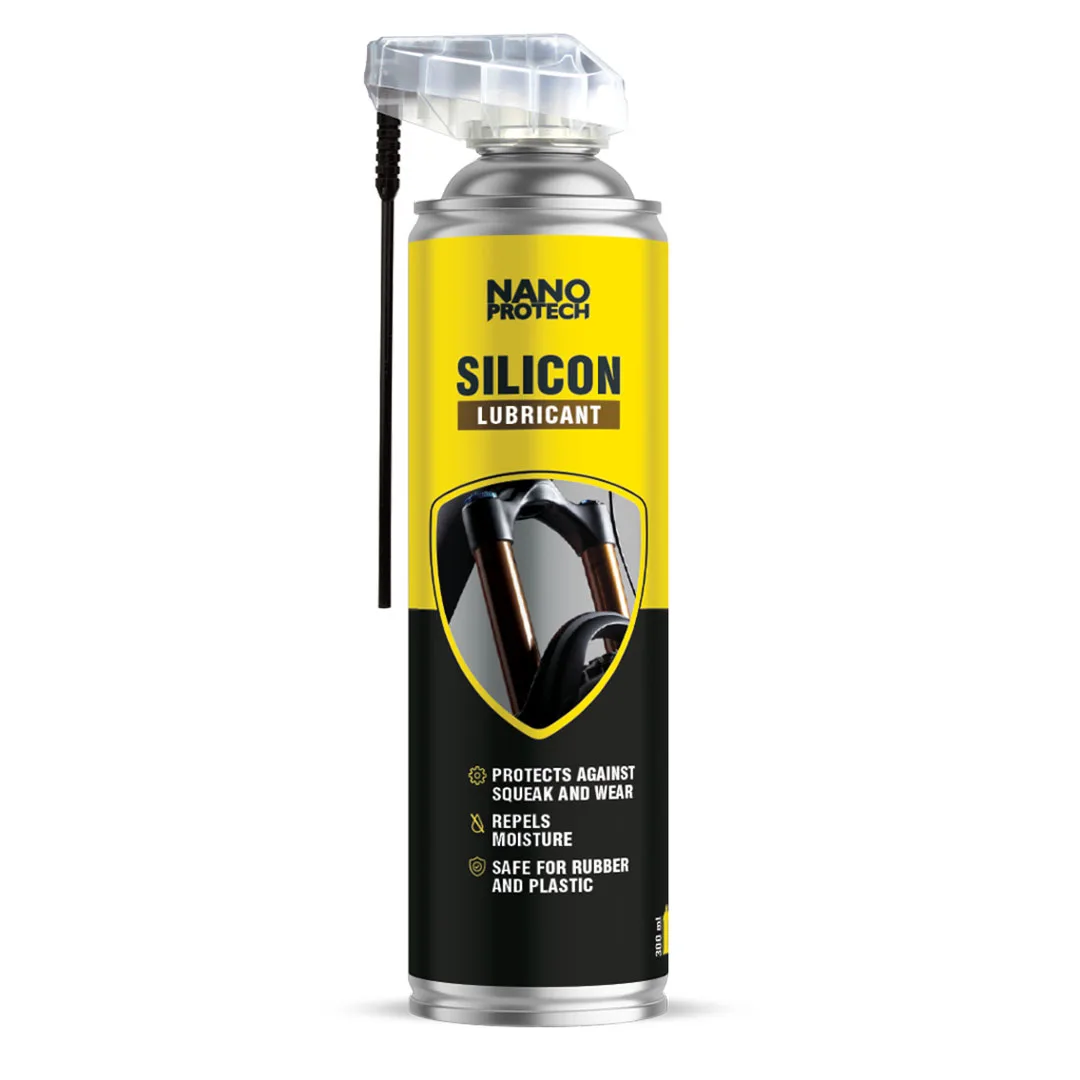
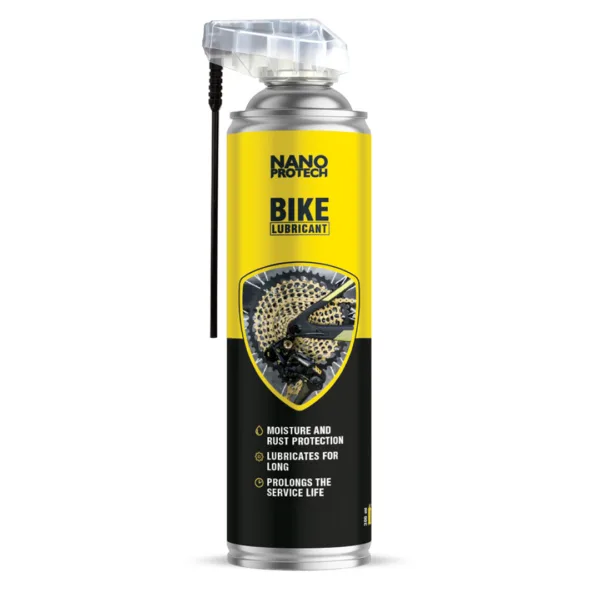
Silicone bike lubricant, 400 ml
NANOPROTECH Silicone bike lubricant is an aerosol lube for forks, shocks, chains, hubs, bottom brackets, brake cables and headsets. It has high penetrating and lubricating capacity, repels water, prevents rust and is safe for rubber and plastic. Apply it to a clean surface every 50 km.
The 400 ml can (300 ml of product) covers about 4 m² on average.
Where to use the silicone lube on a bike
- Fork and shocks: the lube improves the sliding of moving parts.
- Seatposts, including dropper posts.
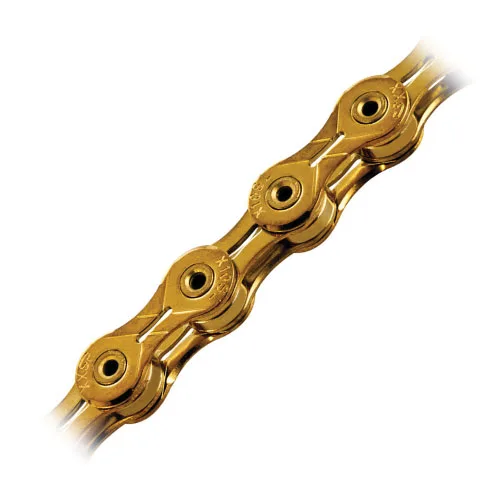
- The chain: the lube reduces friction and keeps moisture off the links.
- Hubs, bottom bracket and headset — on the outside, along the seals; the lube is not forced into the bearings.
- Brake cables — but never the brake discs or pads.
- Mechanisms after washing the bike and when preparing it for a new season.
Why it suits forks and suspension
- Free of mineral oils; does not damage seals or dust wipers.
- Silicone (polymethylsiloxane) fluid base with high penetrating capacity.
- Safe for rubber and plastic.
- Does not smudge or evaporate.
- Repels water and prevents rust.
- Works on the outside — on the fork legs and dust wipers — so it suits coil, air and elastomer forks.
How to apply
Shake the can and apply the lube to a clean surface at 0 °C to +28 °C. Reapply every 50 km. Do not treat brake discs or pads.
Key specifications
| Base | silicone (polymethylsiloxane) fluid, free of mineral oils |
|---|---|
| Application temperature | 0 °C to +28 °C |
| Storage without loss of properties | −30 °C to +45 °C |
| Application interval | every 50 km |
| Coverage | about 4 m² per can |
| Storage temperature | +5 °C to +35 °C |
| Shelf life | 3 years |
| Sizes | 400 ml |
| Item number | NPGSV0036 |
Questions and answers
Can it be used as a bike fork lube and on the seatpost?
Yes. It is designed for forks, shocks and seatposts: riders note that the fork legs and dropper post move smoothly without sticking after treatment. The formula is free of mineral oils and does not damage seals or dust wipers.
How often should the silicone lube be applied?
Every 50 km. Shake the can before use and apply the lube to a clean surface only.
At what temperature can it be applied?
At 0 °C to +28 °C, on a clean surface. The −30 °C to +45 °C range refers to storage: within it the product does not lose its properties, while the recommended storage temperature for the can is +5 °C to +35 °C.
Can it be used on the brakes?
Only on the cables. Brake cables can be lubricated, but brake discs and pads must not be treated.
How far does one can go?
About 4 m² of surface on average. The 400 ml can holds 300 ml of product.
Used together with
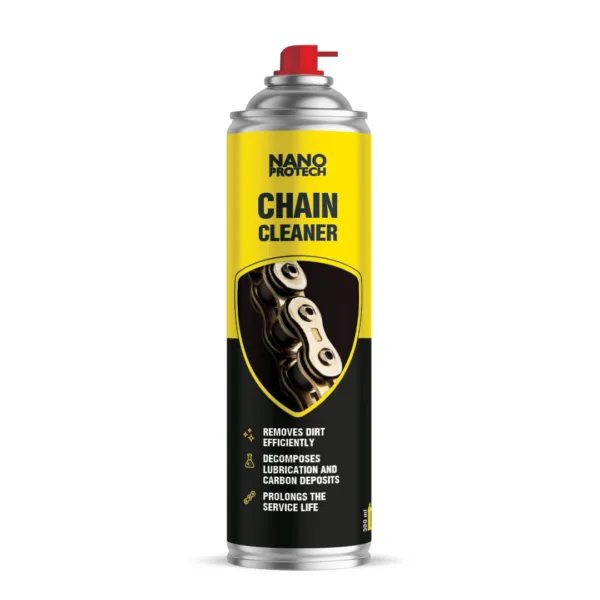
- Chain cleaner — cleans the chain before lubrication
- Bike lubricant — all-weather chain lube for rain and frost
What it helps with
Areas of application
Recommendation for use
Be sure to shake the can before use.
Apply to a clean surface at 0 °C to +28 °C.
One can covers about 4 m² on average.
Apply every 50 km.
Composition
Aliphatic hydrocarbons >35%; polymethylsiloxane fluid >30%; fragrance; hydrocarbon propellant.
Characteristics
| Packaging | Item number | Barcode | Pcs per box | Gross box weight, kg |
|---|---|---|---|---|
| Can 400 ml (nominal 300 ml) | NPGSV0036 | 4610046770315 | 12 | 3.10 |
- TU:
- 20.59.41-025-09201409-2022
Service and shelf life
Shelf life: 3 years from the date of manufacture. Store at +5 °C to +35 °C; the product retains its properties at −30 °C to +45 °C.
Safety measures
Do not apply to brake discs or pads! Pressurised container! Protect from direct sunlight and do not expose to temperatures above +50 °C. Do not store or spray near open flames, hot objects or live electrical equipment. Keep out of the reach of children. Do not pierce or burn, even after use. In case of contact with eyes or skin, rinse with water. Flammable! After use or once the shelf life has expired, dispose of as household waste. Does not deplete the ozone layer.