 English
  Русский
How to clean car upholstery yourself: seats, roof lining and carpets
Updated:
To clean car upholstery yourself, use a foam cleaner for textiles: apply it to the seats, roof lining, door trim and mats, and after 5 minutes remove it with a dry cloth, brush or vacuum cleaner — no rinsing with water. Glass and plastic need a separate foam cleaner, and the dashboard and door panels are finished with plastic polish.
What you need
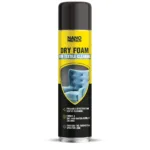
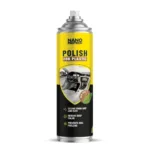
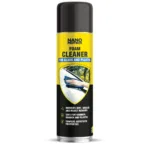
What to clean each surface with
- Textiles — seats, roof lining, upholstery, mats, carpeting and child car seats — take dry foam. This car upholstery cleaner lifts most stains and dirt from woven upholstery, carpet and velour, including whitish de-icer marks on mats. It is not for genuine leather, faux leather or plastic.
- Glass, mirrors and plastic — a foam cleaner that does not run off vertical surfaces or leave streaks.
- Dashboard, door panels and trims — plastic polish. It removes dirt and dust, restores a rich colour and shine and protects against dust and moisture. Keep it off the steering wheel, handles, pedals, mats and seats: the silicone film makes them slippery.
Work in this sequence — textiles, glass and plastic, then polish — so dust and foam stay off the polished plastic and the polish goes onto a clean, dry surface.
How to clean car upholstery — step by step
- Prepare the interior. Open the doors or windows for ventilation. Work above freezing, in warm weather or a heated garage: in frost the water-based foam can freeze and the upholstery will not dry. Remove loose dirt with a brush or vacuum cleaner.
- Test the fabric. Try light-coloured, delicate and patterned fabrics on an inconspicuous area first.
- Apply the foam. Shake the can of NANOPROTECH Car upholstery cleaner and spread it evenly into a thick foam. Treat the whole panel from seam to seam, not just the stain, without soaking the fabric. On the roof lining, apply a thin layer and do not rub hard: the fabric is glued to its backing.
- Wait 5 minutes. The active foam lifts dirt out of the fibres.
- Remove the foam. Take it off thoroughly with a dry, clean cloth, brush or vacuum cleaner.
- Let the upholstery dry. Leave the doors or windows open and do not sit on the seats until the fabric is completely dry, usually several hours.
- Clean the glass and plastic. Shake the can of Foam glass cleaner, apply a thick foam, leave it for 5 minutes and wipe with a dry, clean cloth.
- Polish the plastic. At +5 °C or above, spread Car plastic polish over a clean, dry surface, leave it to soak in for 2 minutes and wipe thoroughly with a dry cotton cloth. To avoid mist inside, spray it onto the cloth outside the car. It also stops rubber seals freezing — see how to lubricate car door seals.
The same foam works on sofas and carpets at home — see how to clean a fabric sofa at home.
Why it may not work
- Stains remain after the first pass. The foam removes most stains; fresh ones come out more easily than old ones. For very heavy dirt, repeat once the fabric is dry and work the foam in with a brush.
- The foam was removed straight away. It needs 5 minutes to soak in and lift dirt out of the fibres.
- Marks appear after drying. The cause is foam on the stain only, soaked fabric or foam left behind. Treat from seam to seam, avoid excess and remove all the foam.
Safety precautions
- All three products are flammable aerosols in pressurised cans. Do not spray them near open flames, red-hot objects or live electrical equipment.
- Work with good ventilation; in a car, with the windows open.
- Keep the cans out of direct sunlight and do not heat them above 50 °C; do not pierce or burn them, even when empty.
- In case of eye contact, rinse with water; on skin, wash with soap and water. Keep out of the reach of children.
Frequently asked questions
How do I clean stains off car seats?
With dry foam. Apply it over the seat from seam to seam and remove it after 5 minutes with a dry cloth, brush or vacuum cleaner.
How do I clean a car roof lining without damaging it?
Gently and without excess moisture: a thin layer of foam, no hard rubbing, removal after 5 minutes and drying with the doors open. The fabric is glued to its backing and can come unstuck if soaked; do not clean a lining that is already peeling or sagging.
How long do car seats take to dry after cleaning?
Usually several hours, depending on how damp the fabric is, the upholstery thickness, the temperature and ventilation. Sparing application, thorough foam removal, warmth and open doors speed it up.
Do I need a vacuum cleaner to clean car upholstery?
Not necessarily. Loose dirt can be removed with a brush, and the foam with a dry, clean cloth or brush.
Does the foam need rinsing with water?
No. After 5 minutes, remove it with a dry cloth, brush or vacuum cleaner.
More solutions
- How to clean a computer and laptop with compressed air
- How to fix stick drift: cleaning a controller stick with contact cleaner
- How to clean a throttle body yourself — step by step
- How to clean a fabric sofa at home: upholstery, stains and carpets
- How to remove rust from metal: car bodies, tools and fasteners
- How to remove a seized bolt or nut
Still have questions?
Describe your task and a NANOPROTECH technical specialist will suggest the right product and how to use it.