 English
  Русский
How to fix a leaking pipe with epoxy putty: metal pipes, taps and radiators
Updated:
You can fix a leaking pipe yourself with epoxy putty, also called cold weld: a two-component, plasticine-like compound that you knead with your fingers and press onto the leak with the water turned off. For steel, cast iron, copper, aluminium and brass pipes, taps and radiators, use NANOPROTECH Metal epoxy putty. On pressurised water and heating systems this is a temporary repair until the section is replaced, and drinking water pipes are not repaired this way.
What you need
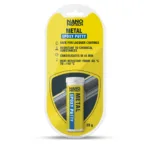
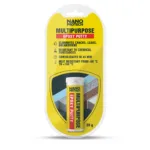
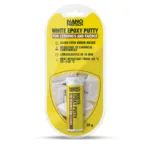
Which epoxy putty suits pipes
- Metal pipes, taps and radiators. Water-resistant metal epoxy putty is designed for steel, including stainless steel, aluminium and brass, and bonds cast iron and copper cleaned back to bare metal. It reinforces pipe joints and plumbing connections and stops leaks.
- Plastic parts. Multipurpose epoxy putty bonds plastic, metal, concrete, ceramics and stone. Polypropylene and polyethylene pipes (marked PP and PE) hold epoxy putty poorly: they are heat-welded or the section is replaced.
- Ceramic sanitary ware, heated towel rails. Epoxy putty for ceramics and faience seals joints in ceramic and faience sanitary ware and bonds even under water, on a wet surface, but not against water pressure.
- What is not repaired this way. Drinking water pipes: the putty must not be applied where it touches food or drinking water. Boilers, water heaters, heat exchangers and gas equipment are a job for a specialist.
Once cured, all three putties withstand −60 °C to +150 °C and resist temperature changes and chemical reagents, so temperature-wise they suit heating and hot water pipes. Pressure is restored only after full curing.
How to fix a leaking pipe with epoxy putty — step by step
- Turn off the water and release the pressure. Close the valve before the leaking section and drain the pipe. Let a heating or hot water pipe cool down. Under pressure the putty will not stick.
- Prepare the leak area. Clean off dirt and rust, rough the pipe up with coarse sandpaper, degrease and dry it. Whether the joint holds depends on preparation and mixing.
- Cut off part of the stick. Use at least 1/3 of the stick for one repair and keep the rest in a dry, dark place.
- Knead the putty. Wearing protective gloves, knead both components with your fingers until the colour is uniform; you can wet your fingers with water.
- Cover the leak. Press the putty firmly onto the leak. On a damp or oily surface, keep smoothing it until it grips: on an oily surface the bond strength is 20% lower.
- Smooth the seam. Shape the putty with a flat object moistened with water.
- Wait for it to cure. Metal and multipurpose putties set in 45 minutes. A non-pressurised pipe, such as a waste pipe, can take load after 2.5 hours; restore pressure in water and heating systems after 24 hours and check for drips. The seam can be sanded and painted after 2.5 hours.
For more on mixing, applying and storing the stick, see how to use epoxy putty.
Why it may not work
- The water was not turned off. Under pressure, water washes the putty away. Turn off the water, release the pressure and drain the pipe.
- The leak area was not prepared. Remove dirt, rust and oil, then roughen, degrease and dry the pipe. On an oily surface the bond strength is 20% lower.
- The components were not fully mixed. Knead until the colour is uniform: the strength of the joint depends on it.
- Pressure was restored too early, or the wrong putty was used. Restore pressure 24 hours after application. Polypropylene and polyethylene pipes hold epoxy putty poorly.
Safety precautions
- Wear protective gloves and keep the stick components out of your eyes. If they get in, rinse with water and seek medical advice.
- Do not apply epoxy putty to drinking water pipes or to surfaces in contact with food.
- Do not repair boilers, water heaters or gas equipment with it: call a specialist.
- Store the sticks in a dry, dark place at no more than +35 °C, out of the reach of children.
Frequently asked questions
Can I fix a leak with epoxy putty without turning off the water?
No. Under pressure, water washes the putty away before it cures. Turn off the water and drain the pipe; if the surface stays damp, smooth the putty on until it grips. The putty for ceramics bonds even under water, but not against water pressure.
Will epoxy putty withstand hot water?
Temperature-wise, yes: the cured putty withstands −60 °C to +150 °C. Repair the pipe cooled and unpressurised, restore the water after 24 hours and treat the repair as temporary.
How long does epoxy putty take to cure on a pipe?
Metal and multipurpose putties set in 45 minutes. Pressure in water and heating systems is restored after 24 hours.
How do I fix a leak in a heating pipe?
With metal epoxy putty, as a temporary measure until the section is replaced. Shut off the system, release the pressure, let the pipe cool, apply the putty and restore pressure after 24 hours.
More solutions
- Heated rear window not working: how to find a broken line and repair it
- How to use epoxy putty (cold weld): preparation, mixing, application, storage
- Blue vs red threadlocker: how to choose, apply and undo it
- How to fix a fuel tank or radiator leak: a temporary repair with epoxy putty
- How to glue glass: clear UV glue, light and step-by-step instructions
- How to fix remote control buttons: restoring contacts with conductive glue
Still have questions?
Describe your task and a NANOPROTECH technical specialist will suggest the right product and how to use it.