 English
 Русский
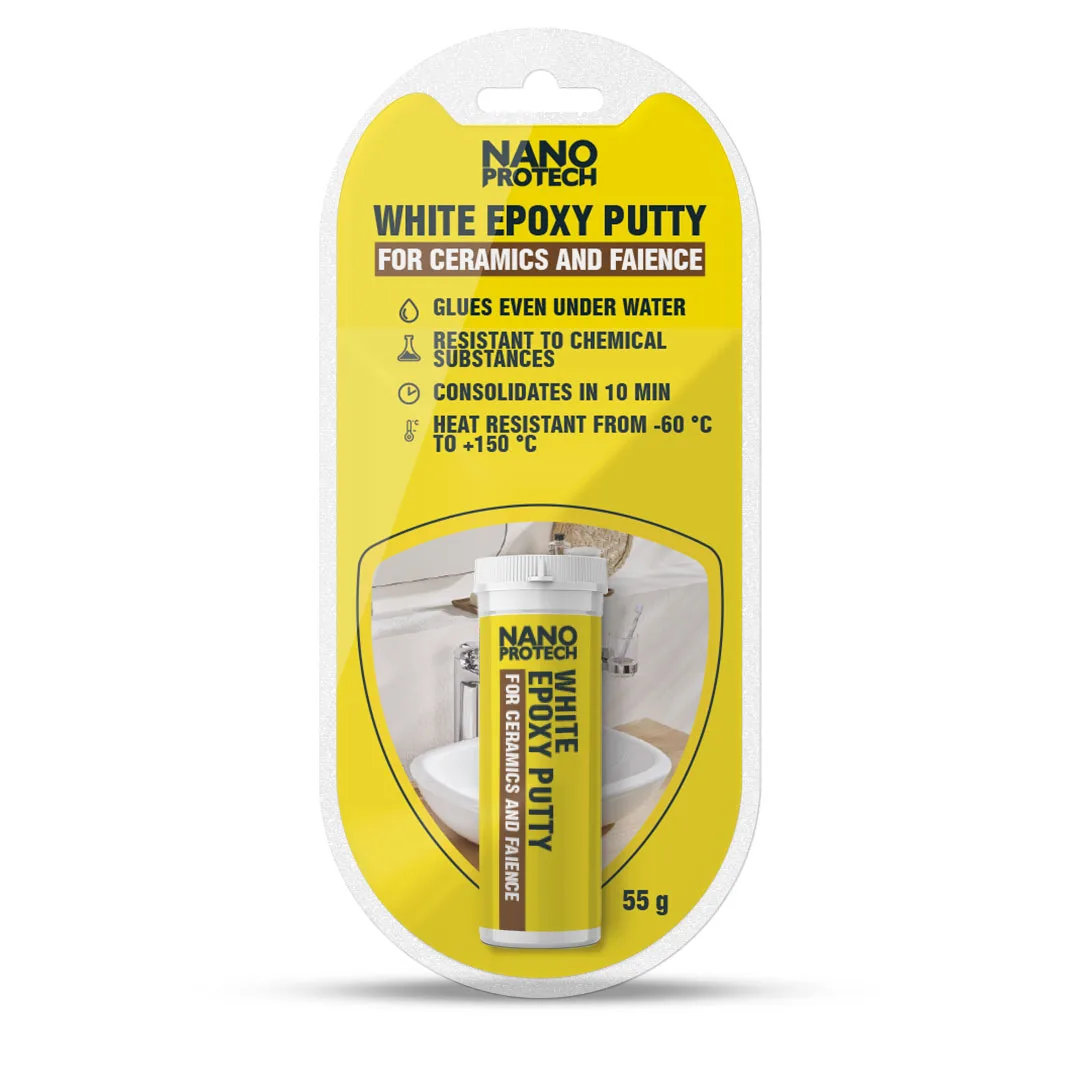
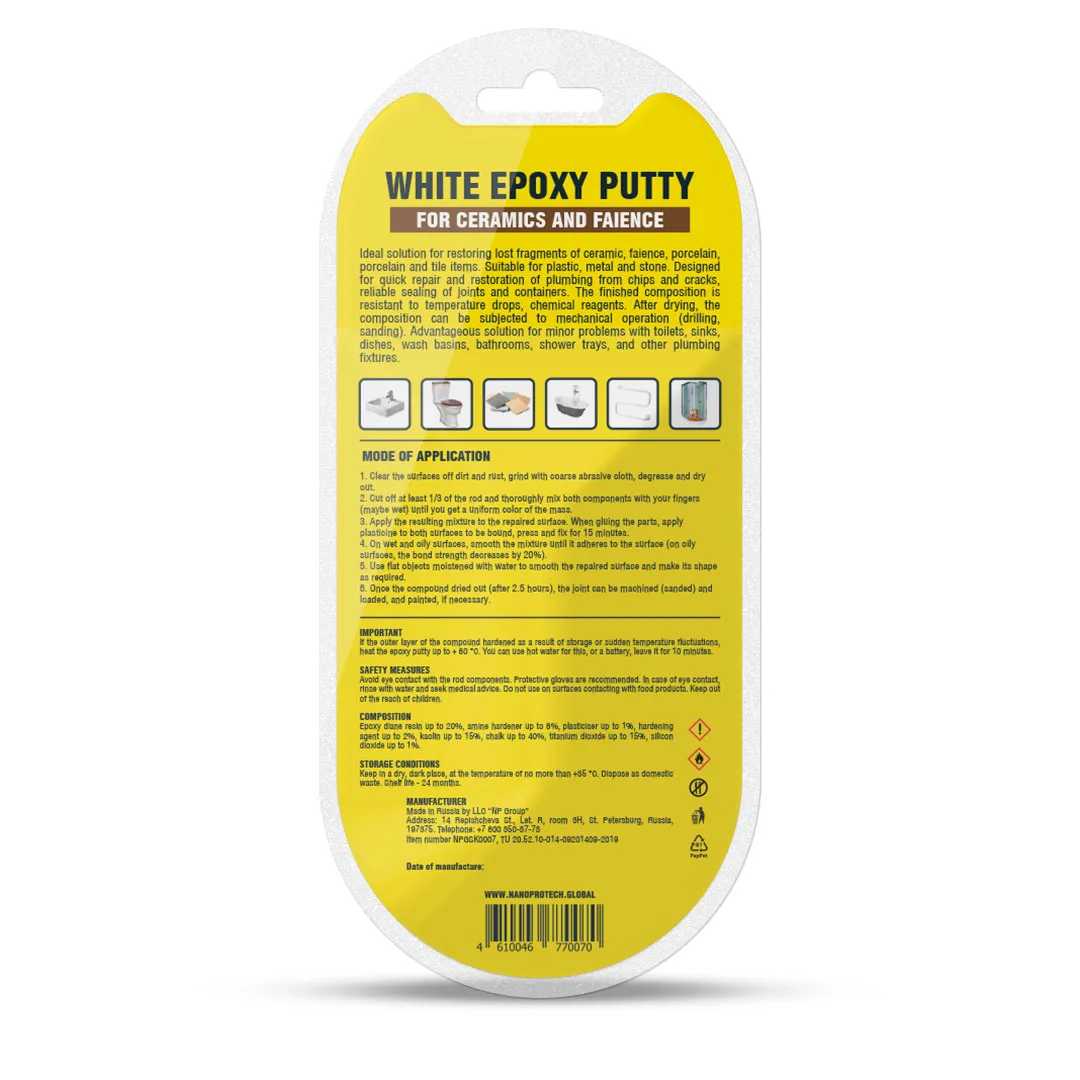
Epoxy putty for ceramics and faience, 55 g
NANOPROTECH Epoxy putty for ceramics and faience is a two-component cold weld for plumbing and sanitary ware: it repairs chips and cracks and rebuilds missing fragments of ceramics, faience, porcelain, porcelain stoneware and tiles. It bonds even under water; the joint is shaped straight after mixing, while the putty is still pliable, and after 2.5 hours the repair can be sanded, drilled, loaded and painted. The cured putty resists chemical reagents and temperatures from −60 °C to +150 °C.
The 55 g stick: cut off at least 1/3 for a repair; if the outer layer has hardened in storage, soften it by warming to +60 °C for 10 minutes.
What it repairs in the bathroom and kitchen
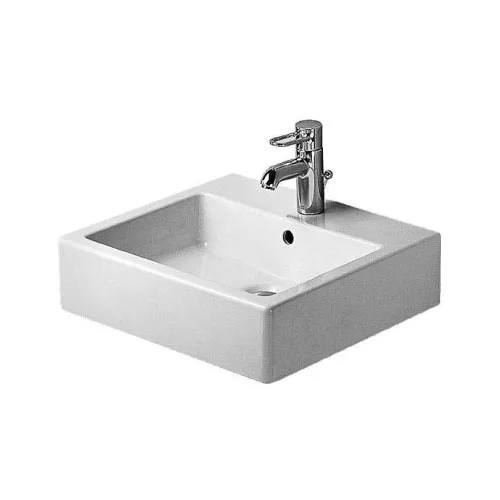
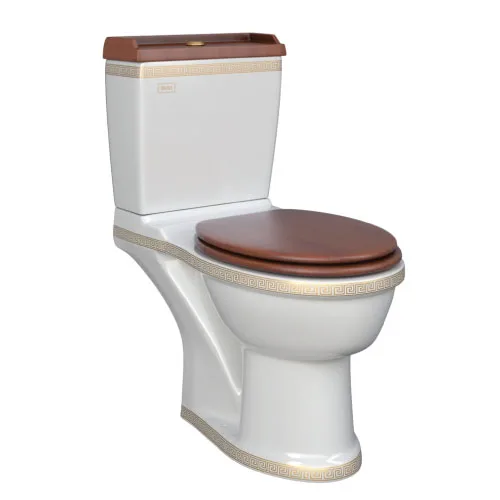
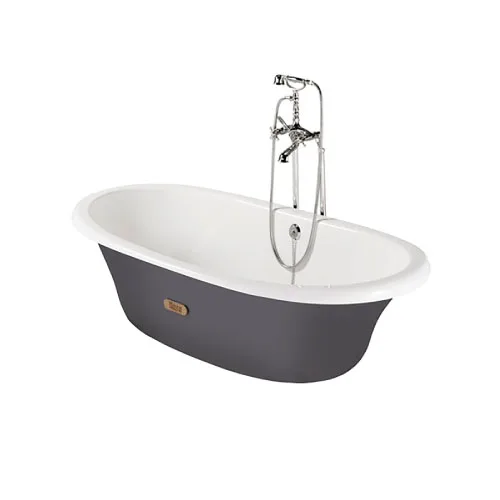
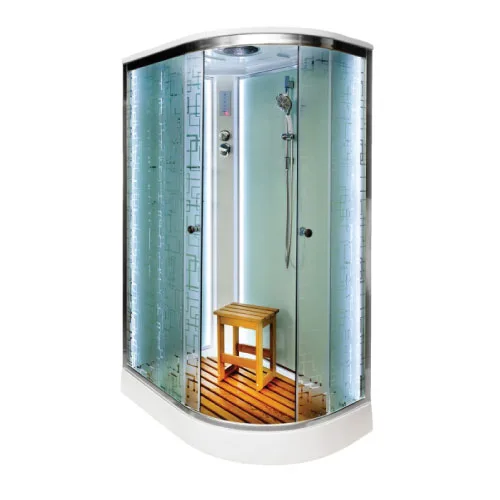
- Chips and cracks in sinks, toilets, baths, kitchen sinks and shower trays.
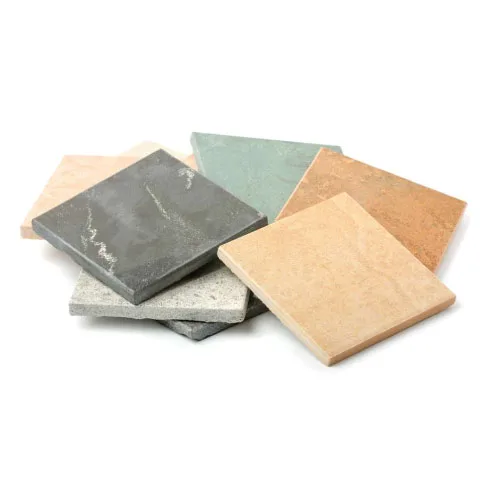
- Missing fragments of tiles and porcelain stoneware.
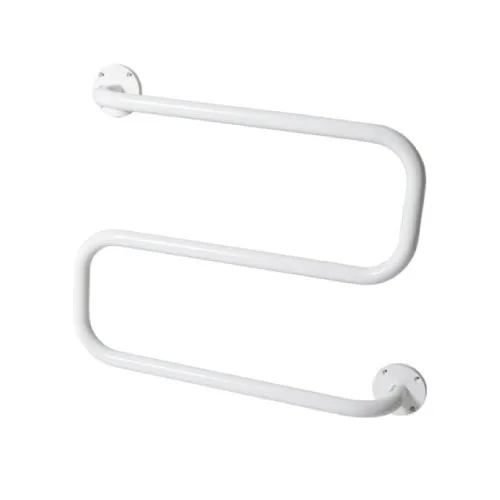
- Leaking joints in sanitary ware and containers, and heated towel rails — with the water shut off; under pressure this is a temporary repair until the part is replaced.
- Porcelain and faience items, except surfaces that come into contact with food.
- Plastic, metal and stone parts.
Properties of the water-resistant cold weld
- Bonds even under water: on a wet surface, smooth the putty on until it grips. Shut off a leak under pressure first.
- Shape the joint straight after mixing, while the putty is still pliable; when bonding, press the parts together and hold them for 15 minutes.
- After 2.5 hours the repair can be sanded, drilled, loaded and painted.
- Light-coloured mass containing 15% titanium dioxide — not pure white, so paint the cured joint if it has to match the colour of the sanitary ware.
- Resists temperature changes and chemical reagents.
- On oily surfaces the bond strength is 20% lower.
Suitable for
Ceramics, faience, porcelain, porcelain stoneware and tiles, as well as plastic, metal and stone. Typical chip and crack repairs are in bathrooms and kitchens: sinks, toilets, baths, kitchen sinks, shower trays and cabins, heated towel rails.
Key specifications
| Type | two-component epoxy putty (cold weld) with titanium dioxide |
|---|---|
| Materials | ceramics, faience, porcelain, porcelain stoneware, tiles, plastic, metal, stone |
| Holding time when bonding | 15 minutes |
| Ready for machining and load | after 2.5 hours |
| Heat resistance | −60 °C to +150 °C |
| Shelf life | 18 months |
| Sizes | 55 g |
| Item number | NPGSK0007 |
Questions and answers
Can I repair a chip on a wet sink or under water?
Yes, as long as the water is not flowing under pressure. The putty bonds even under water: on a wet surface, keep smoothing it until it grips. Whenever possible, clean the area, rough it up with coarse sandpaper, degrease and dry it — preparation is the key to a lasting repair.
How long does the ceramic epoxy putty take to dry?
Shape the joint straight after mixing, while the putty is still pliable. After 2.5 hours the repair can take load and be sanded and painted. When bonding parts, hold them pressed together for 15 minutes.
Can I glue ceramic dishes with it?
Only where the putty will not touch food: it must not be applied to surfaces that come into contact with food products. Gluing handles back onto mugs and kettles for hot drinks is not recommended: if the handle breaks off, you could get burnt.
What temperature can the repair withstand?
From −60 °C to +150 °C. The putty resists temperature changes and chemical reagents, so it suits baths, sinks, kitchen sinks and heated towel rails.
Which materials besides ceramics can it repair?
Faience, porcelain, porcelain stoneware and tiles, as well as plastic, metal and stone. It also fills deep chips: shape it in place with flat objects moistened with water.
Used together with
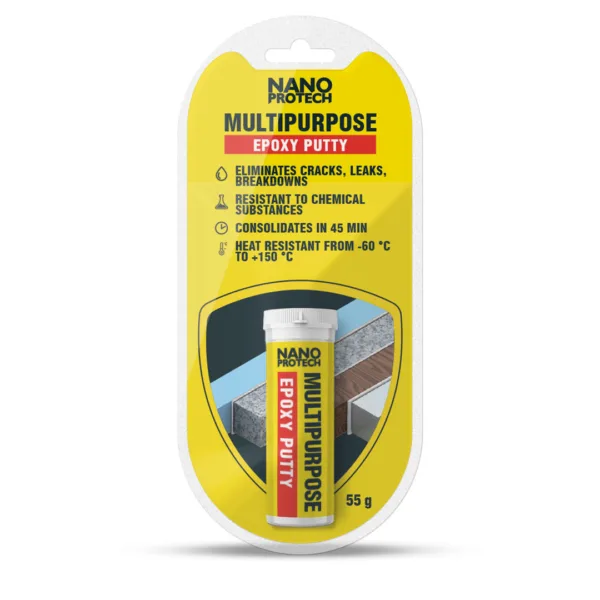
- Multipurpose epoxy putty — for concrete, wood, marble, glass and other materials
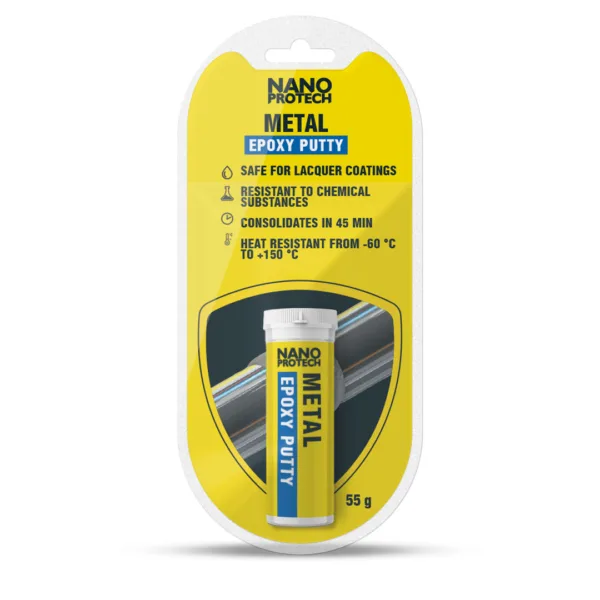
- Metal epoxy putty — for leaks in metal taps, radiators and plumbing connections
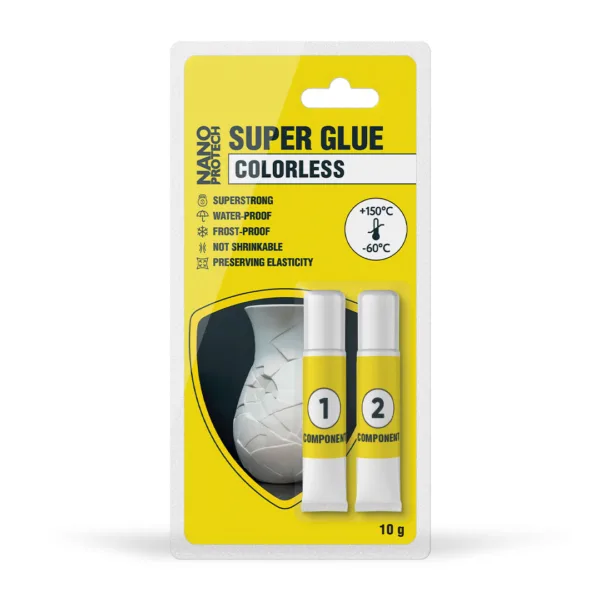
- Super glue for glass — UV-curing, for a clear bond on glass and crystal
What it helps with
Areas of application
Recommendation for use
1. Clean dirt and rust off the surfaces, sand them with coarse sandpaper, degrease and let dry.
2. Cut off at least 1/3 of the stick and knead both components thoroughly with your fingers (they may be wet) until the colour is uniform.
3. Apply the mixture to the surface being repaired. When bonding parts, apply the putty to both surfaces, press them together and hold for 15 minutes.
4. On wet and oily surfaces, smooth the mixture until it adheres to the surface (on oily surfaces, bond strength is 20% lower).
5. To smooth the repaired surface and give it the required shape, use flat objects moistened with water.
6. Once the compound has hardened (after 2.5 hours), the joint can be machined (sanded), loaded and, if necessary, painted.
Composition
Epoxy-diane resin up to 20%, amine curing agent up to 8%, plasticizer up to 1%, curing accelerator up to 2%, kaolin 15%, chalk up to 40%, titanium dioxide 15%, silicon dioxide 1%.
Characteristics
| Packaging | Item number | Barcode | Pcs per box | Gross box weight, kg |
|---|---|---|---|---|
| 55 g | NPGSK0007 | 4610046770070 | 24 | 1.55 |
- TU:
- 20.52.10-014-09201409-2019
Service and shelf life
Store in a dry, dark place at no higher than +35 °C. Dispose of as household waste. Shelf life: 18 months. If the outer layer of the compound has hardened during storage or after sharp temperature changes, warm the cold weld to +60 °C for 10 minutes, for example in hot water, on a radiator or on the top cover of a car engine.
Safety measures
Avoid getting the components in your eyes. Wearing protective gloves is recommended. In case of contact with eyes, rinse with water and seek medical advice. Do not use on surfaces that come into contact with food. Keep out of the reach of children.